








































































 SPP2395 PREMIER Wiki
Project 6 (2025-2028)
Spatio-temporal profiling of microglial heterogeneity and dynamics in glioblastoma
Glioblastoma cells diffusely infiltrate the surrounding brain tissue far beyond the macroscopically visible tumor mass. Tumor cells in distant infiltration zones are clinically relevant because they escape surgical resection and contribute substantially to tumor recurrence. Microglia are abundant components of the glioblastoma microenvironment, yet it remains poorly understood how their dynamic behavior and molecular states change across different tumor niches and stages of invasion, and how they may contribute to tumor progression.
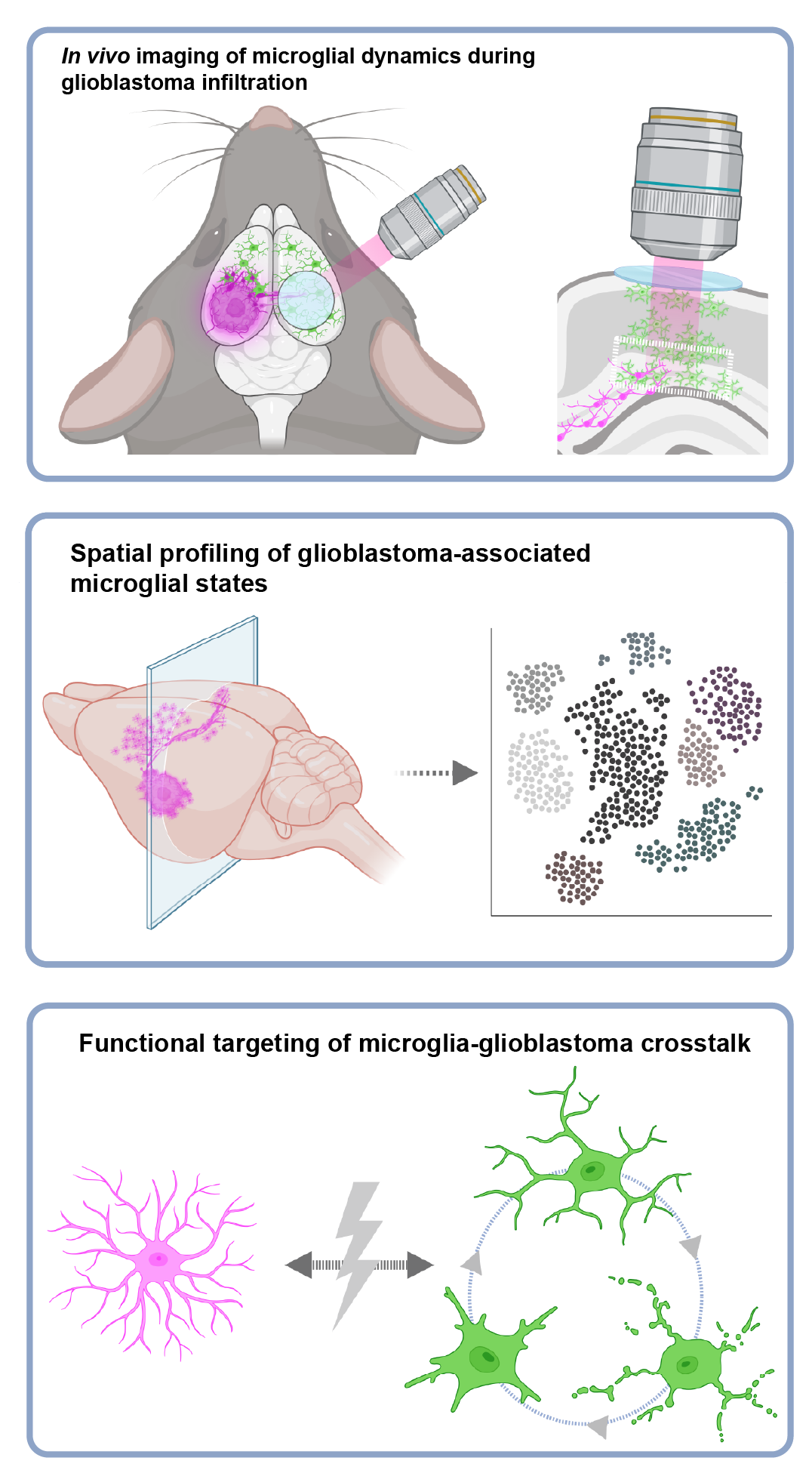
This project investigates the spatio-temporal heterogeneity of microglia during glioblastoma progression. Using an immunocompetent autochthonous mouse model of glioblastoma together with longitudinal two- and three-photon intravital microscopy, we will monitor microglial dynamics and calcium signaling in awake head-fixed mice. Calcium imaging will provide a functional readout of microglial signaling within the tumor microenvironment, complementing structural and morphological analyses of microglial behavior. Particular focus will be placed on the far infiltration zone, where glioblastoma cells encounter resident microglia within an intact brain environment distant from the tumor bulk. To link microglial dynamics in vivo to molecular state transitions, imaging-based readouts will be combined with spatially resolved transcriptomic and tissue analyses across distinct tumor niches, including the tumor bulk, near infiltration zone, and far infiltration zone. This multimodal approach will allow us to determine how local tumor burden, spatial context, and disease progression shape microglial states and microglia-glioblastoma crosstalk.
Finally, the project will explore whether manipulating microglial function can alter glioblastoma progression and tumor-immune interactions. By defining dynamic and molecular microglial states associated with invasive tumor growth, this work aims to identify mechanisms that may inform future microglia-directed therapeutic strategies in glioblastoma.
Principal Investigators
Institutions