





































































 SPP2395 PREMIER Wiki
Project 5 (2025-2028)
Microglial dynamics in retinal diseases: Müller cells and T cells as local and peripheral interacting partners
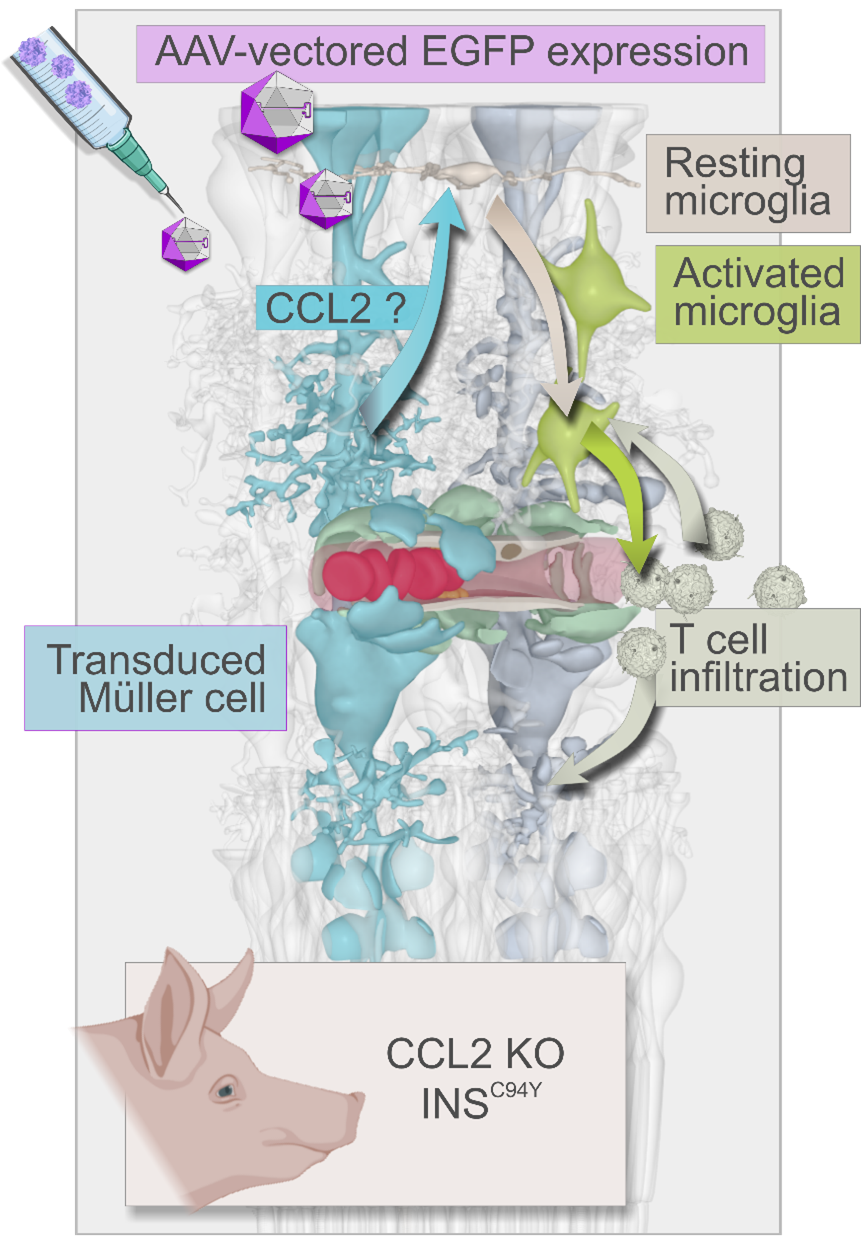
This project investigates how microglial cells—the retina’s resident immune cells—interact with Müller cells, the major macroglia of the retina that provide essential metabolic and structural support, and with T cells that enter the retina during inflammation. The focus is on these interactions in diabetic retinopathy (DR), a leading cause of vision loss, and during adeno-associated virus (AAV)-based gene therapy, a promising treatment strategy for retinal diseases. Using advanced diabetic models and genetically engineered pigs with strong relevance to human disease, the study examines how local cues such as metabolic stress and Müller cell–derived chemokines (like CCL2) influence microglial activity in different retinal regions. It also explores how microglia coordinate immune responses with both local and peripheral partners, and how this diversity affects retinal inflammation and responses to gene therapy. Through single-cell proteomic analyses, the project will uncover the molecular profiles of individual retinal cells to better understand immune signaling and microglial heterogeneity. Together, these insights aim to guide the development of improved therapies for diabetic retinopathy and other retinal or central nervous system diseases.
Principal Investigators
Institutions